The world as it is and the world as it should be are not the same place. Most people eventually make peace with that. I do not, especially when it comes to what people pay to move their own money.
Send $100 across a border. In much of the world, about $94 arrives. The global average cost is 6.36%, and in many of the corridors we care about most, it is higher. Then people wait days for money that already belongs to them. Intermediaries who took none of the risk and did none of the work still take a cut. The system was built decades ago, and no one rebuilt it.
SWIFT was built in 1973. It is older than the personal computer. Since then, communications got faster, cheaper, and more accessible almost everywhere. Money did not.
I do not think we ever get to a perfect world of $100 sent and $100 received every time. There is probably always some final layer of friction left. But that is not a reason to stop. $94 becomes $97. $97 becomes $99. And when it becomes ninety-nine, you close the next half too.
We call that infinite halves.
You do not wait for perfection. You keep closing the gap.
That idea shapes how we build at Movement. We do not promise a finished world. We promise to close the next half, and the half after that, for as long as it takes.
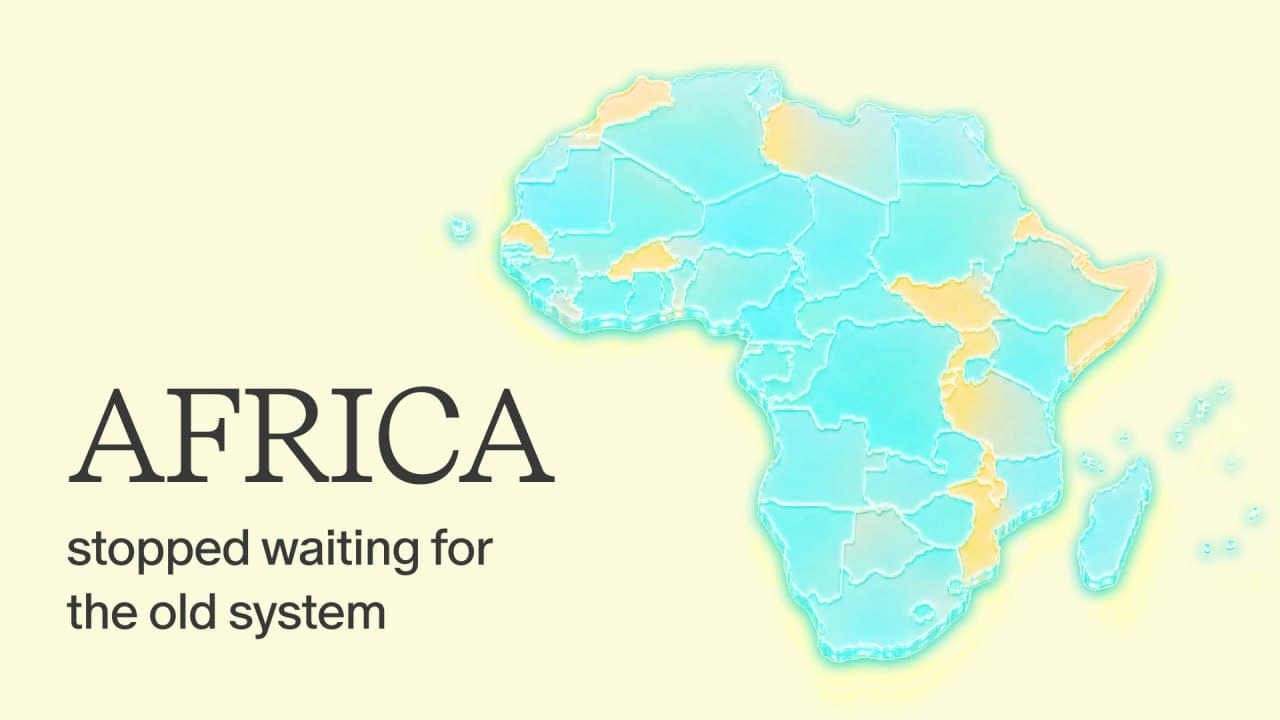
We chose hard markets on purpose: Afghanistan, Venezuela, Iraq, Nigeria. Places where financial systems were constrained, damaged, inflated away, or priced out of reach. That was not an accident. It makes commercial sense because these corridors move hundreds of billions of dollars each year and remain badly underserved. But it is personal too. Many of us come from these places. We have family members who feel the difference between $94 and $100 because that difference pays for something real.
We do not build this from a desk. We get on planes, land in difficult markets, and sit across from banks, regulators, and local operators. That work matters more than anything polished enough to post online. Infrastructure is built in rooms where decisions get made.
The status quo had fifty years to fix this and left the person at the end of the transfer paying for its failures. I think that person matters. We do too. That is what we are building around.
Idealism by itself is not enough. We are not trying to sound noble. We are building a business. The mission only matters if the model sustains itself. That is not a compromise. It is the only way the work lasts long enough to matter.
Hold us to that standard.
We are not building infrastructure for its own sake. We are not here to become another intermediary taking a cut. We are here to remove the ones already there and bring a person's money closer to where it should be: in their hands, with less friction, less leakage, and fewer people in the middle.
The people we build for are underserved, not forgotten. That distinction matters. Underserved describes a problem. Forgotten implies acceptance. I do not accept it.
We will keep closing halves. And if the day comes when someone sends $100 home and $100 arrives, we still will not be done. We will go after the next half.
-- Torab