Stablecoin conversations often stop at the infrastructure pitch where faster settlement, lower costs, and broader reach are treated as enough on their own. Until that shows up in products people actually use, it remains aspiration.
What has been harder to show is where that aspiration is turning into actual financial product usage.
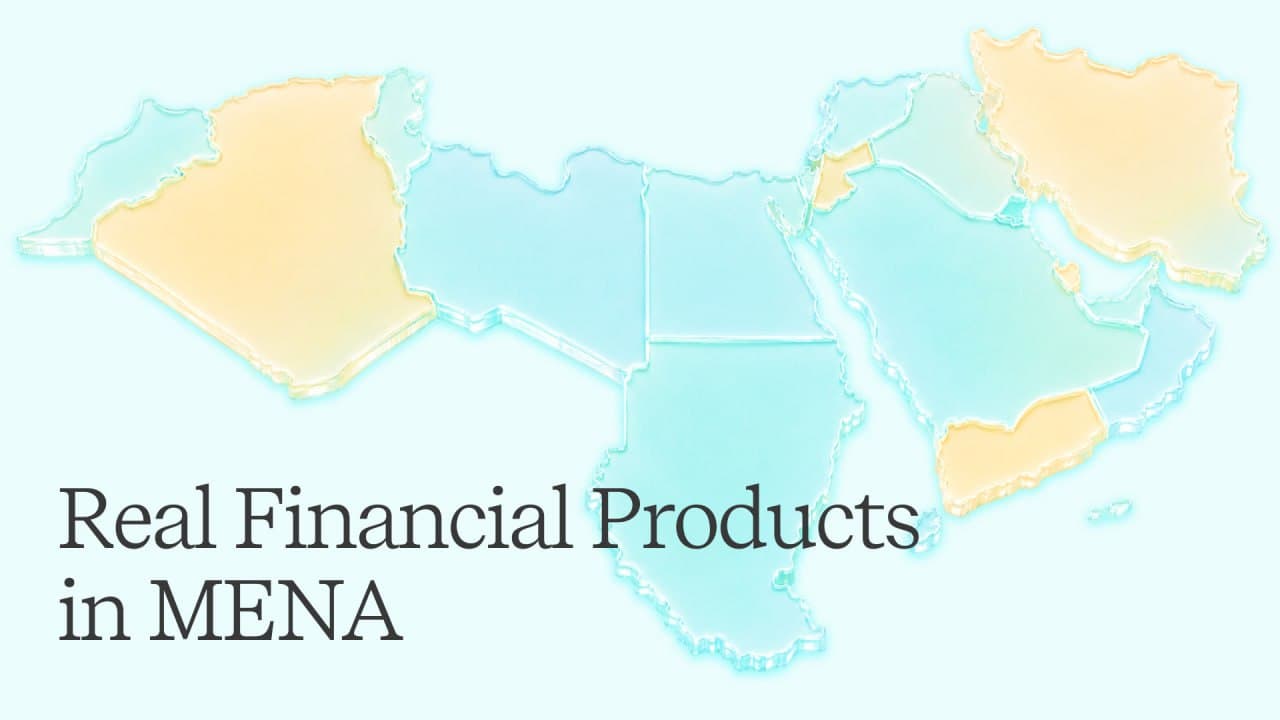
That is starting to change across MENA.
The underlying need in the region is not hard to see. Cross-border money movement is still too slow, too fragmented, and too expensive. Legacy payment chains insert delays, manual steps, and fees into flows that people rely on for everyday life. Even where average remittance costs in MENA compare better than in some other developing regions, the underlying system still leaves too much friction in the path of moving and using money.
What matters now is whether teams on the ground are turning that capability into products people actually use.
HesabPay is one example of that shift. That shift is becoming more visible through the product surface as well. Today, HesabPay is launching up to 1 million Visa cards for customers in Afghanistan through Visa Pay. That matters not just as a launch milestone, but as another sign that stablecoin-backed settlement infrastructure is beginning to support financial products people can use in ordinary life.
The story here is that real activity is showing up across the stack. In July 2026 alone, HesabPay recorded more than 1 million transactions on the platform and more than AFN 10.1 billion (Afghan Afghani) in value (approximately $154 million*). Over the last 30 days, the platform processed nearly 1 million transactions with a success rate above 96%, alongside more than 52,000 unique senders and more than 38,000 unique receivers.
That operating footprint is reinforced by earlier distribution and aid flows. UNHCR has used HesabPay reloadable cards to support more than 625,000 refugee returnees and 17,500 displaced people in Afghanistan, delivering over $35 million in assistance. Since 2023, HesabPay's partnership with WFP has also helped 49,000 people open digital accounts, including 20,600 women through the World Bank-backed Mother and Child Benefit Programme.
Just as important are the types of transactions moving through the platform, because they point to everyday financial utility. Mobile top-ups, bill payments, fund transfers, bank-linked flows, cash-in, and cash-out all show up as meaningful parts of activity. That is the point. People are not just opening accounts. They are using the product for ordinary financial tasks.
The usage footprint is also concrete. Recent transaction activity is concentrated in cities including Kabul and Herat, with additional activity across other Afghan markets and some cross-border signal beyond them. That is a more useful indicator than broad regional rhetoric. It shows the product is operating in places where practical financial access and reliability matter.
This is the lens through which MENA should increasingly be understood. Not as a future stablecoin market, but as a region where operator-led teams are beginning to turn digital dollar infrastructure into usable financial products.
That is where Movement fits in.
Our role is to support the settlement infrastructure underneath products that are already solving real problems in-market. The most important work in regions like MENA will not come from generic claims about blockchain efficiency. It will come from enabling teams that already understand the users, the corridors, the constraints, and the trust required to make financial products work.
The signal in HesabPay's data is not hype. It is repeat usage, payment activity, and real operational flow. If that pattern continues, MENA will not just be a region where stablecoins are discussed. It will be a region where stablecoin-backed financial infrastructure becomes part of everyday business.
*AFN-denominated dashboard value figures are converted to approximate USD using the average AFN/USD exchange rate for the relevant reporting period.